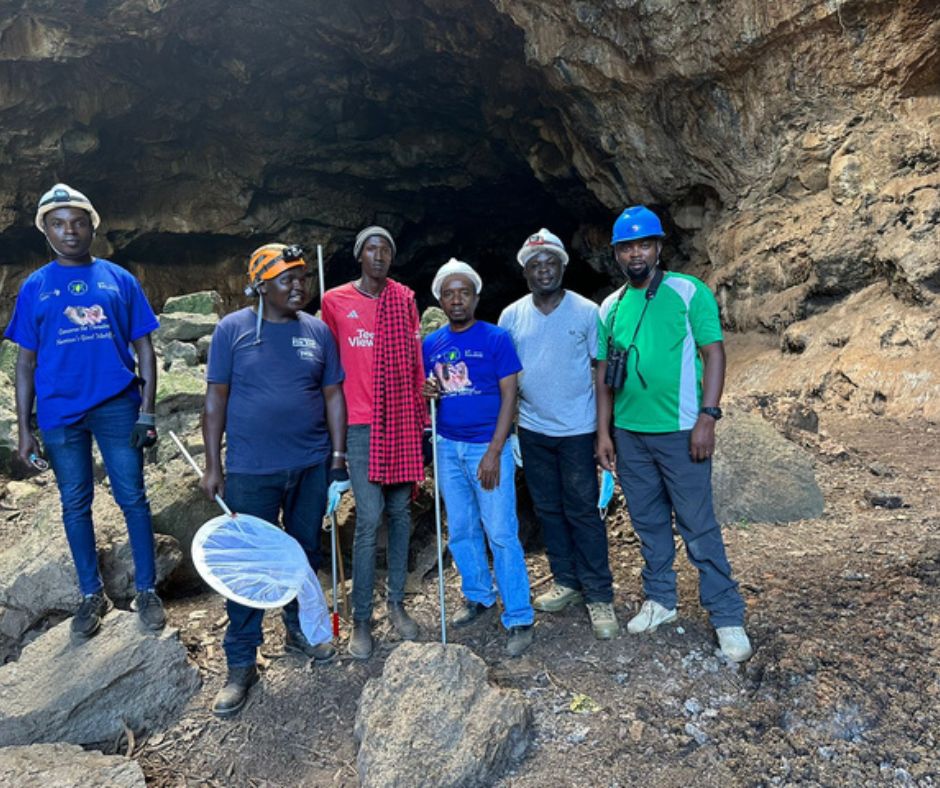
Nestled in Kenya’s Great Rift Valley, Mount Suswa is a striking volcanic landscape of caves, lava flows, and open savannah. It is also a critical refuge for bats in East Africa, including the rare Harrison ’s Giant Mastiff Bat (Otomops harrisoni), listed as Vulnerable on the IUCN Red List. These highly social bats form vast colonies, sometimes numbering in the thousands or millions, and depend on Suswa’s caves for breeding and shelter. However, growing tourism and unregulated cave visits are disrupting these sensitive roosting
sites. Mt. Suswa Conservancy attracts visitors eager to see the famous “Baboon Parliament, ” located inside a key bat cave. Frequent disturbance can stress colonies, reduce breeding success, and even force bats to abandon their roosts. Losing even one critical cave could severely impact this vulnerable species and the ecosystem services such as insect control and nutrient cycling, that bats provide.
We cannot afford to lose this population. Protecting Mt. Suswa’s caves is no longer optional, it is urgent. Our call to action is clear: safeguard critical roosting habitats now, before disturbance pushes this vulnerable species closer to extinction. Our plan combines science, protection, and community leadership. We will identify, monitor, and secure essential roosting caves from interference and damage.
Through acoustic surveys and population monitoring, we will gather the data needed to guide evidence-based conservation. We will install carefully designed gates at selected cave entrances to protect colonies while maintaining controlled access. Just as importantly, we will work hand in hand with local communities, providing education to dispel myths about bats, installing clear signage and visitor guidelines, and establishing community-led rules for cave use. By fostering local stewardship, we ensure that conservation efforts are not imposed from outside, but owned and sustained from within.